

Three weeks ago, OpenAI announced an internal model had solved the Clay Mathematics Institute’s Millennium Prize problem on finite-time blowup in the Navier–Stokes equations. The problem had resisted mathematicians for 92 years, with some researchers devoting entire careers to it. OpenAI’s evidence was a Lean verification certificate along with a rushed, large, and poorly exposited proof of their counterexample. They stated that 10,000 agents, working together for 88 hours, found this counterexample.
Inspired by the success of OpenAI’s internal model, I was curious what their Astra model was capable of achieving. I simply prompted the model to “Make significant analytical progress on ω [the optimal MM bound].” After a few prompts and a little bit of encouragement, it produced a proof of an improvement to the existing method, along with an accompanying bound, improving the best-known asymptotic bound from n2.371177 to n2.371045. The improvement was as prompted, an analytical improvement, and the bound improvement was on par with previously published results (see figure 1).
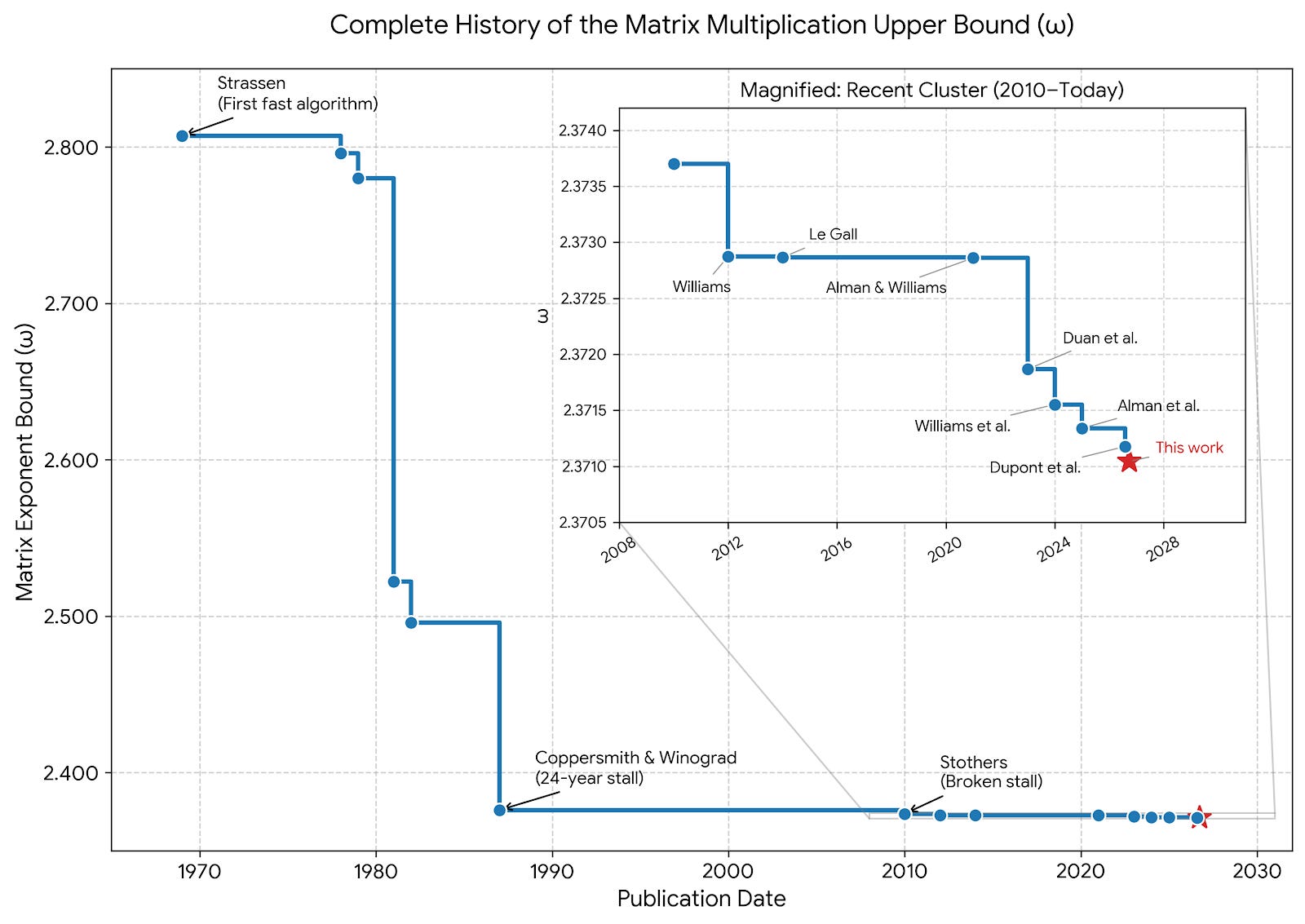
Because I was unfamiliar with parts of the algebraic reduction and tensor machinery behind Astra’s proposed technique, I relied on the Lean programming language to verify the analytical advances in the proof of the improved bound. Using two Pro/Max consumer AI accounts, Codex and Claude Code, I formalized the result in about 30 hours of nonstop AI coding (GPT-6 Astra xhigh, Claude Fable 5.1 Ultracode). The formalization comprises 1.1 million lines of Lean code (47,316 named theorems/lemmas). This gargantuan suite of Lean code, running for over an hour on a ‘hugemem’ node of the Ohio Supercomputer Center’s Ascend Cluster, verified the result. My PhD advisor and coauthor on this blog post, Andrew Perrault, verified the theorem statement and independently reverified the Lean result.
To be respectful of the mathematical community, we reached out to experts in this subfield. To be transparent about the results we’d obtained, we followed the guidelines outlined in the Leiden Declaration. In response to our outreach, experts told us that the exact bound number had little value and that the methods used are incredibly difficult to comprehend. So, after careful consideration, we chose to publish this result on GitHub for three core reasons:
The anecdotal evidence that “end-to-end discovery and massive formalization are becoming commoditized” is of vital consequence to mathematicians and similar fields of theoretical research.
We believe the formalization is of value to efforts such as Prove2Me and future efforts building on this work. Releasing the Lean formalization openly reduces the formalization burden for future research.
Basic availability of these results will help reduce duplicated effort.
The Flood Gates are Opening
UCLA professor of computer science and mathematics Amit Sahai wondered in a recent blog post, “When we feel that we cannot keep up, will we take that as a reason to leave research mathematics?”
For the Navier–Stokes problem, nobody working to produce the result was able to understand it. OpenAI’s swarm generated 130 billion tokens over the course of its solution, more text than can be read in a human lifetime. OpenAI got the glory but failed to help the math community digest the result.
The harsh reality is that as consumer AI becomes ever more capable, theorem-hunters will come for glory. Mathematicians are far scarcer than AI power users, yet those users will have the power to produce and verify mathematical breakthroughs without ever understanding the methods or madness of their results.
Presently, many mathematicians are worried about the comprehensibility of these AI-produced results. Asking AI to explain advanced mathematics is a bit like this guide to drawing an owl:
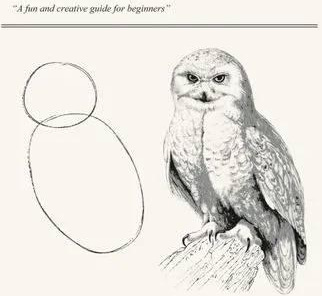
While the owl can be certified as ‘drawn’, the how-to guide is not particularly useful.
Understandability is only the tip of the iceberg, though! The prospect of super mathematical intelligence threatens to make frontier mathematical understanding a target moving too fast to hit. Work that yesterday would have been the topic of entire PhD dissertations became a 3-hour prompt. The effects of this phenomenon are already visible in CS, where AI-accelerated research is driving a rapidly accelerating rise in paper submissions, increasingly overwhelming major conferences.
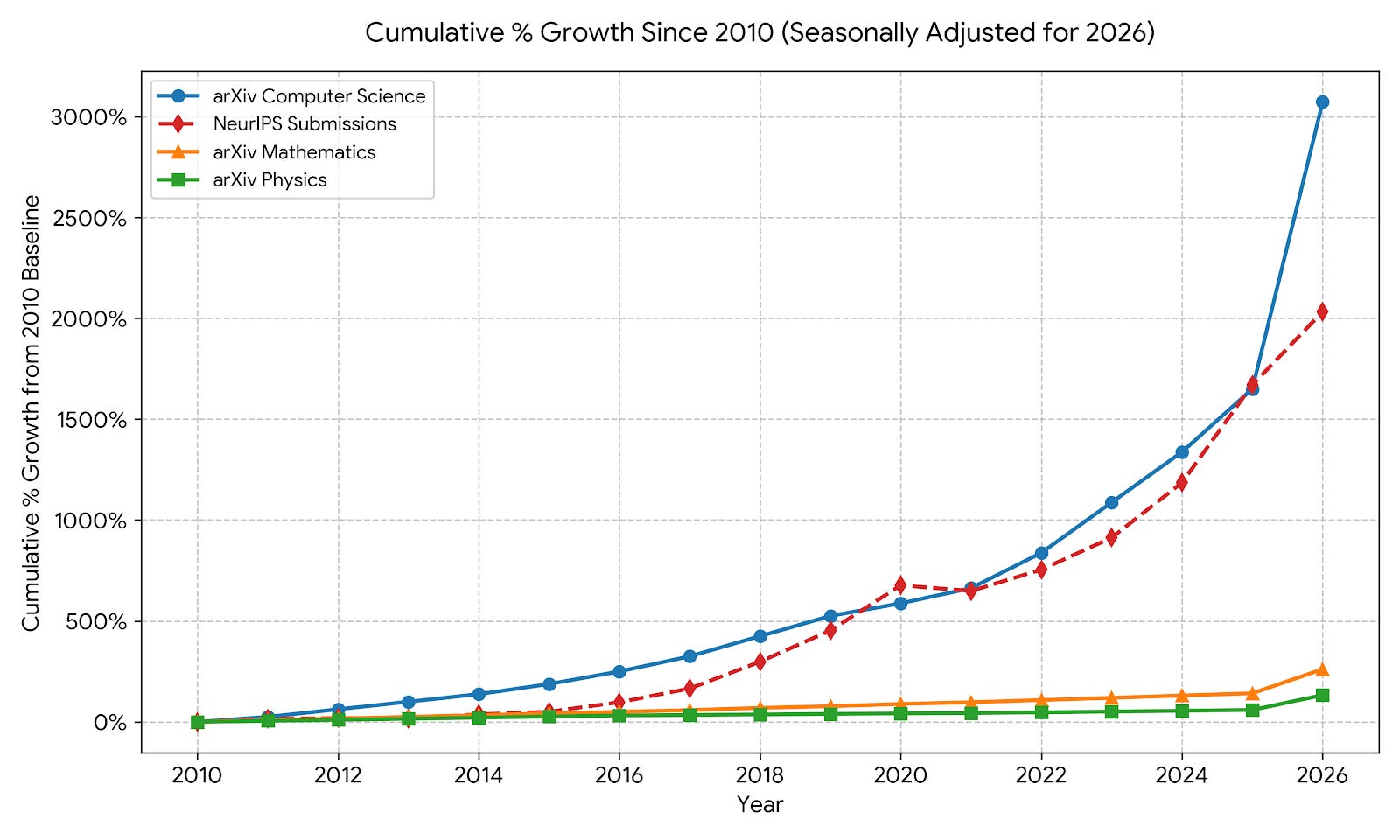
As frontiers of academic discovery become increasingly commoditized, similar growth is likely in mathematics, physics, economics, statistics, linguistics, etc. There are few theoretical or digital fields that will not feel the impact of this trend.
Paradoxically, mathematics may be unusually well suited to this future because of formal verification. Whereas software engineers have been overwhelmed with manual review, much less human verification is necessary in mathematics.
Terry Tao has raised questions about the long-term value of solving mathematical problems en masse, fearing that chasing solutions with AI might be like mining a resource unsustainably. His blog argues for a new axiom, “that we should promote human flourishing.” Meanwhile, public opinion polls indicate that Americans are becoming increasingly concerned about the risks associated with powerful AI.
The average user will never be able to take direct advantage of the frontier math capability of OpenAI’s next model. So it’s reasonable to question why AI companies prioritize math over problems with more direct value to human flourishing.
We want your opinion: does human flourishing need super mathematical intelligence? If yes, how do you envision it being used for good? If not, where would you have frontier labs divert their effort?